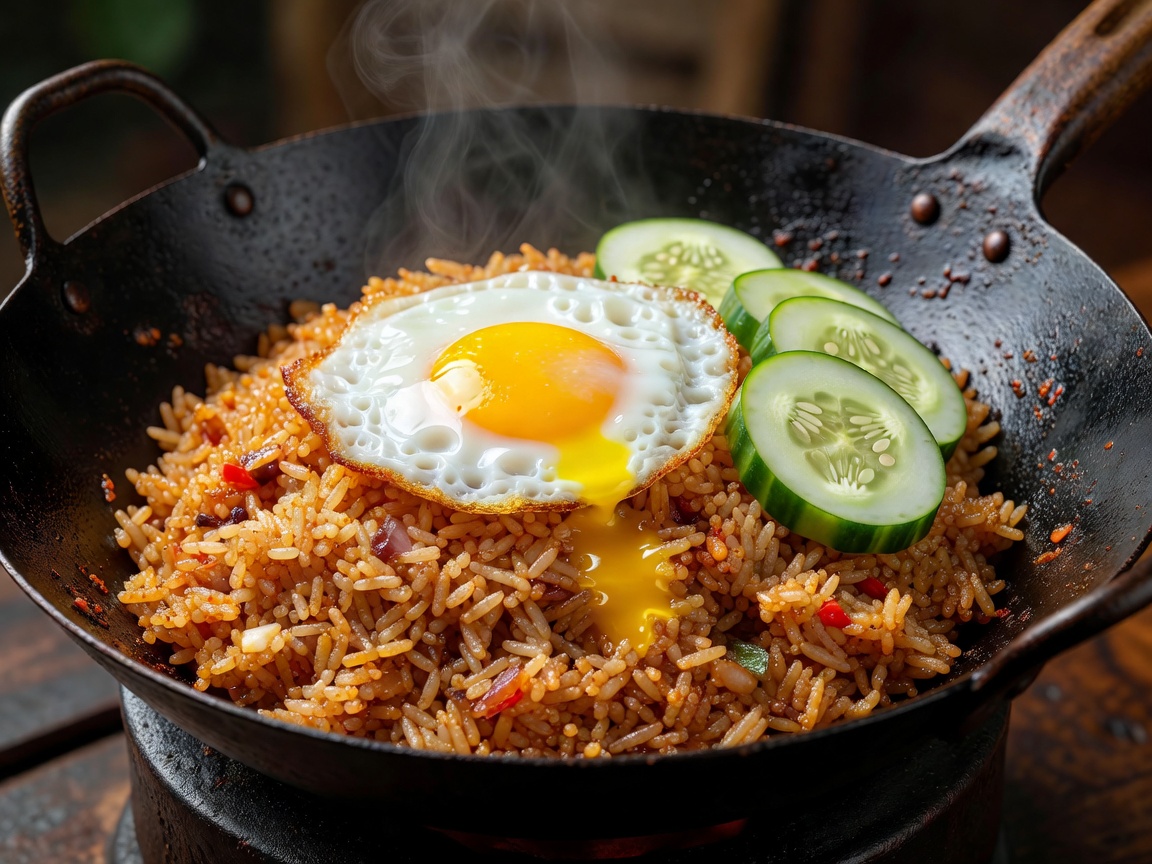
The Crucial Role of Retrogradation
Freshly cooked jasmine rice is saturated with swollen, moisture-heavy amylopectin molecules. If introduced directly to a hot wok, these fragile cells rupture immediately, releasing moisture and creating a soggy paste.
By refrigerating cooked rice uncovered for 12 to 24 hours, starch retrogradation takes place: the amylose chains re-align into tightly packed crystalline structures while surface moisture evaporates. This forms a firm grain jacket that can withstand vigorous tossing in high-temperature fat without disintegrating.
Kecap Manis Caramelization and 'Wok Hei'
Unlike Cantonese fried rice seasoned with light soy, Indonesian Nasi Goreng relies on Kecap Manis (thick sweet soy sauce infused with palm sugar, star anise, and galangal). When poured around the blazing perimeter of a carbon steel wok (at temperatures exceeding 260°C / 500°F), the palm sugars instantly caramelize and undergo pyrolysis, coating each retrograded rice grain in micro-bubbles of smokiness (Wok Hei).