Why Carnaroli is Known as "The King of Italian Rices"
In the Po Valley marshes of northern Italy (Vercelli, Novara, and Pavia), three primary risotto cultivars dominate: Arborio, Vialone Nano, and Carnaroli. Among these, Carnaroli is universally regarded by master chefs as the pinnacle.
Carnaroli contains a significantly higher amylose content (up to 24%) and a resilient central chalky core (perla). This allows the grain to endure up to 18 minutes of continuous agitation while shedding surface starch into the broth to generate an unctuous emulsion without ever losing its al dente bite.
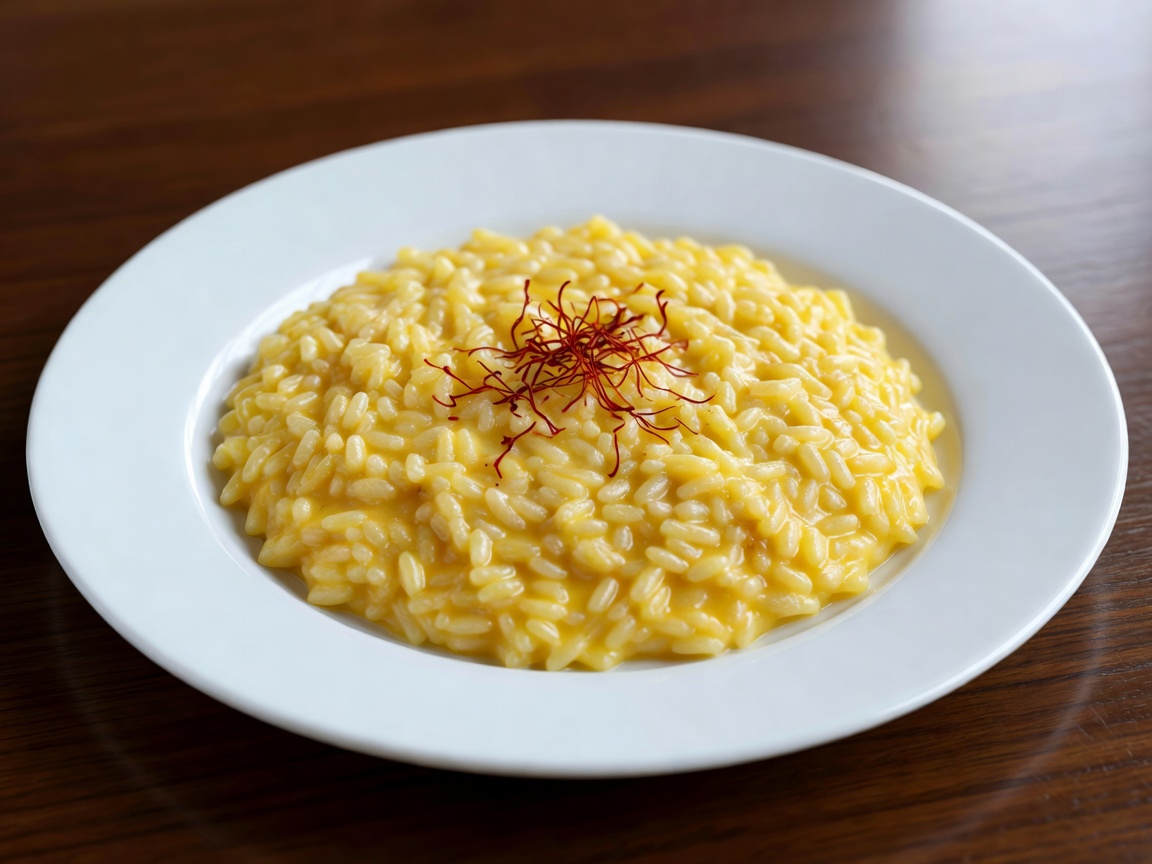
"The true Milanese risotto must achieve the consistency of 'all'onda'—a fluid, gentle wave when the shallow plate is tilted, never solid and never soupy."
The 4 Fundamental Pillars of Risotto Engineering
- La Tostatura (Toasting): Grains are dry-toasted in rendered beef marrow and butter until translucent and warm to the touch. This forms a protective outer shield that regulates starch dissolution.
- L'Innaffiamento (Wine Quenching): Dry white wine is introduced cold to thermal-shock the grain surfaces, releasing initial starches and setting the acidity profile.
- Il Brodo Graduale (Gradual Broth Addition): Simmering rich beef and capon stock is ladled continuously, allowing mechanical friction between grains to build a velvety starch suspension.
- La Mantecatura (Cold Emulsion): Off heat, ice-cold butter and finely grated Grana Padano or Parmigiano-Reggiano are whipped vigorously into the pan, forming a permanent dairy-starch emulsion.