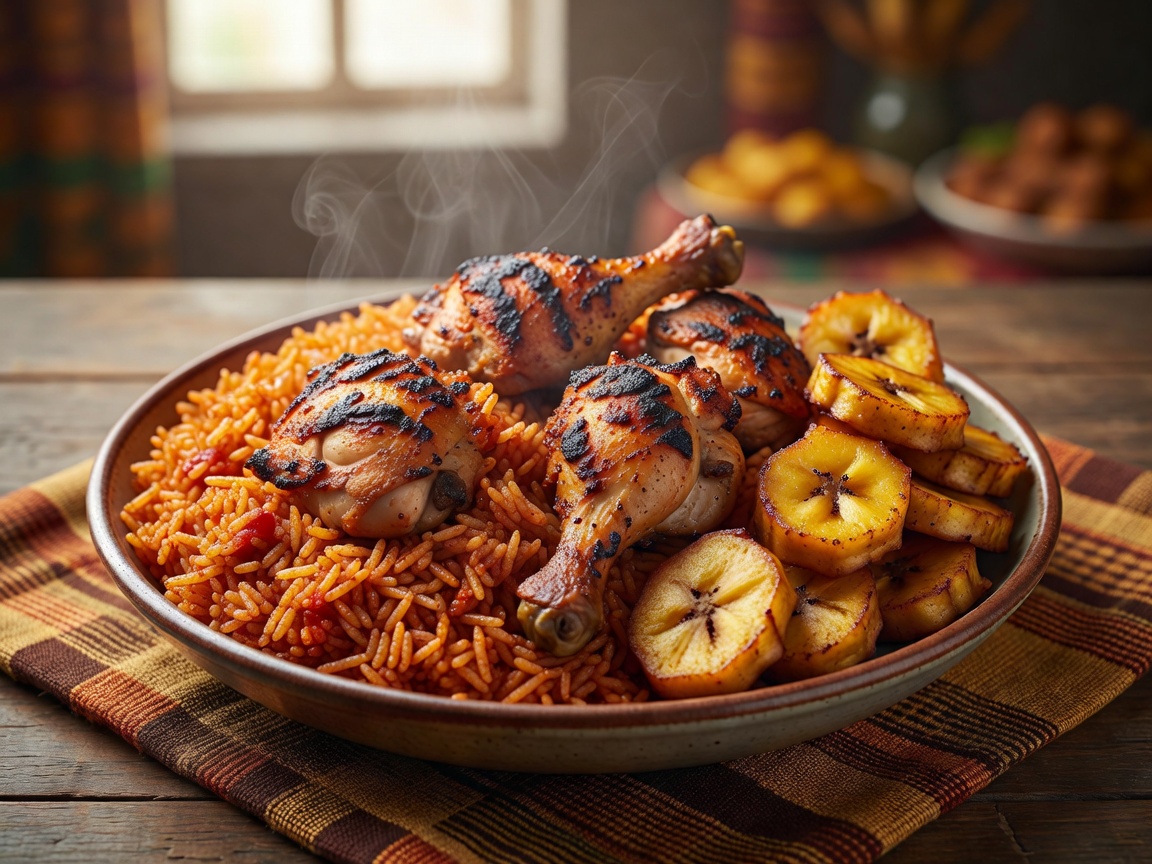
Ancestral Roots: From Thieboudienne to Global Phenomenon
Jollof rice traces its lineage directly to the 14th-century Wolof Empire in the Senegambia region, where it was originally known as Ceebu Jën (rice and fish). As trade corridors expanded along the Gulf of Guinea, the technique evolved across Nigeria, Ghana, Sierra Leone, and Liberia.
Why Long-Grain Parboiled Rice is Essential
Unlike raw white rice, parboiled long-grain rice undergoes hydrothermal pressure processing before de-husking. This drives nutrients from the bran into the endosperm and pre-gelatinizes the starch core.
In the acidic, oil-rich environment of a reduced tomato and pepper base (Obatata stew), parboiled rice exhibits exceptional structural integrity:
- Resistance to Acid Stagnation: High tomato acid would cause raw short-grain starch to break down unevenly; parboiled grains cook uniformly.
- Slow Braise Absorption: The grains slowly drink in the meat stock, ginger, garlic, thyme, and charred bell pepper essence without bursting.
"The signature 'party smoke' flavor of authentic Jollof is created by letting the bottom layer caramelize slightly in a foil-sealed cast aluminium pot over high wood fire."