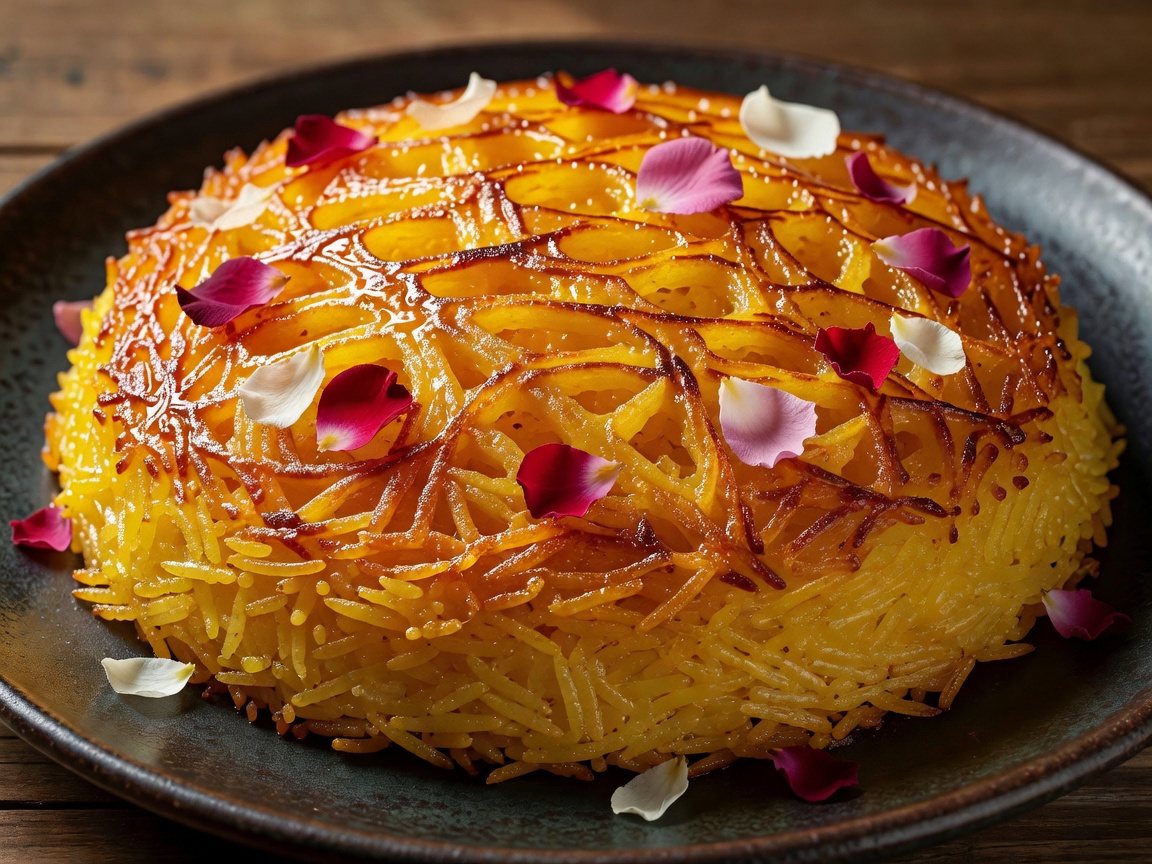
The Chelow Principle: Separation as Pure Art
In Iranian gastronomy, rice preparation is elevated to high architecture. The crowning style, Chelow, requires that every single grain remain completely detached from its neighbor, soft on the palate yet never broken.
This is achieved through the heirloom aromatic cultivars Domsiah and Tarem from the lush southern shores of the Caspian Sea (Gilan and Mazandaran provinces). The process requires a thorough salted cold-water soak (minimum 3 hours) to leach out excess surface amylose before rapid boiling in abundant salted water for exactly 6 to 8 minutes.
Building the Crust: The Yogurt-Saffron Crucible
Once parboiled and drained, the bottom of the pot is layered with ghee, neutral oil, bloomed saffron liquid, and a portion of rice folded with strained whole-milk yogurt. The remaining rice is then piled in a loose conical pyramid, pierced with vent holes (chimneys) to allow upward vapor transit.
A kitchen towel-wrapped lid (Damkoni) is placed tightly on top to absorb condensed steam, preventing water droplets from dripping back down and softening the delicate crust below.